What a Union Could Do for SYR1 — Standing on New York's Shoulders
 Anonymous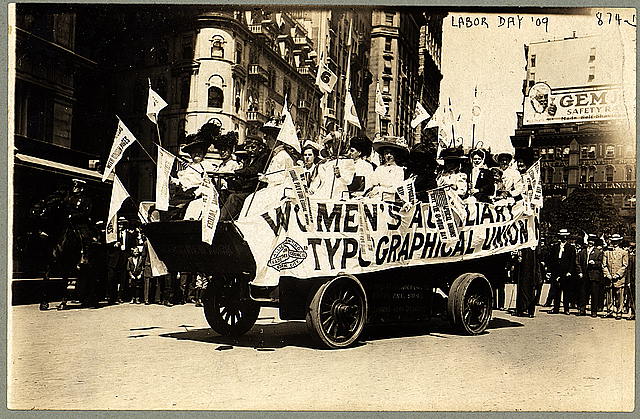
There's a lot of noise around the word "union" at Amazon. Some of it comes from coworkers. A lot of it comes from the company itself — the small-group meetings, the break-room videos, the line about how Amazon "already offers what unions are requesting." This post isn't a sales pitch. It's an honest look at what a union is, what it has meant to working people in this state, what it could do for a place like SYR1, the real tradeoffs, and how the process actually works — so you can decide for yourself.
But to understand what a union could mean here, you have to start with what unions already gave you. Because if you work in New York, you are standing on ground that organized workers fought and died to build.
New York didn't just have a labor movement. It was one.
Almost everything you take for granted at work — the eight-hour day, the weekend, the lunch break, the unlocked fire exit, the workers' comp check if you get hurt — traces back to fights that were largely fought, and won, in New York.
Start with the fire. On March 25, 1911, the Triangle Shirtwaist Factory in Greenwich Village burned, and 146 workers — most of them young immigrant women, some as young as 14 — died, many because the doors had been locked to keep them at their machines. It stood as the deadliest workplace disaster in New York City's history for ninety years — surpassed only by September 11, 2001. That's the company it keeps. But the reason we still talk about it isn't only the horror. It's what came after. Over 400,000 people marched in the victims' memory. The state convened the Factory Investigating Commission, led by Frances Perkins — who watched the workers fall that day, and who would go on to become the first woman in a U.S. cabinet and the architect of much of the New Deal, Social Security, and the federal minimum wage. Perkins later said the day the Triangle burned "was the day the New Deal began."
In the three years after the fire, New York passed roughly three dozen new labor laws: real fire codes, unlocked doors, sprinklers, factory inspections, limits on hours for women and children. The International Ladies' Garment Workers' Union grew into one of the most powerful unions in the country off the back of that organizing. None of it was handed down by generous owners. It was demanded.
And it didn't start in 1911. New York trade unions were arguing for an eight-hour day back in the 1850s — "eight hours is a just and sufficient number of hours for any man to work." The first Labor Day parade in American history stepped off in New York City on September 5, 1882, organized by the Central Labor Union: thousands of workers marching to demand better treatment. The weekend, paid time off, the breaks built into your shift, the laws against child labor and wrongful termination — the New York State AFL-CIO puts it plainly, and the history backs it up: these were hard-fought for and won by unions. They are not gifts. They are the residue of people who organized.
As Frederick Douglass said, and as the labor movement proved over and over: power concedes nothing without a demand.
That's the inheritance. The question this post is really about is whether the next chapter gets written at SYR1 — and whether you want to be part of writing it.
What a union actually is
Strip away the branding and a union is one thing: a legal mechanism that forces your employer to negotiate with you as a group instead of dealing with each worker one at a time. Right now your rate, your VTO/VET, your write-ups, your pay bumps are set by Amazon and handed down. With a certified union, those things become subject to a collective bargaining agreement — a contract the company is legally obligated to negotiate in good faith.
The legal backbone is the National Labor Relations Act of 1935 — the Wagner Act, sponsored by New York's own Senator Robert F. Wagner. Section 7 of that law already protects your right to talk with coworkers about working conditions and to organize, union or not. That protection exists today, at SYR1, whether anyone ever files a card. A union just builds a formal bargaining structure on top of it.
What a union could do for SYR1
The upside is real and it's measurable. Across the economy, union members earn roughly 18% more than comparable non-union workers, and research has found a direct link between union spending power and the wages members actually take home. Collective bargaining also tends to produce written, enforceable rules around discipline, scheduling, and grievances — which matters enormously in a building where rate and "time off task" can end someone's job.
For SYR1 specifically, there's a sharper angle, and it connects straight back to that New York legacy. The state already gives warehouse workers unusual leverage through the Warehouse Worker Protection Act (WWPA) — itself a direct descendant of the Triangle-era reforms, passed because organized labor and worker coalitions pushed it through. Under the WWPA, quotas must be disclosed in writing, can't strip out time for breaks and bathroom use, and you're protected from retaliation for requesting your quota data or filing a complaint — with the burden flipping onto the employer to prove it didn't retaliate if discipline lands within 90 days of your complaint.
A union doesn't replace those rights. It becomes the muscle that enforces them at scale — filing grievances, tracking data demands, funding legal fights, and making sure one worker's complaint isn't just one worker standing alone. That's the whole pattern of New York labor history in one sentence: the law sets the floor, and organized workers make the floor real.
It's also worth noting that companies don't spend serious money fighting things that do nothing. Amazon's well-documented response to organizing — flying in managers, looping anti-union videos, putting up barriers between organizers and the floor — is itself a signal of how much leverage a union represents.
The tradeoffs, honestly
A union is a tool, not a miracle, and you deserve the full picture — not to scare you off, but because going in clear-eyed is how you win.
Winning a vote is the start, not the finish. The JFK8 warehouse on Staten Island won its election in April 2022. Even after the NLRB ruled in 2026 that Amazon must bargain, workers there are still fighting for a first contract, because the company has appealed at every turn. A "yes" vote at SYR1 would open a long campaign, not close one. Worth knowing — and worth being ready for.
Dues and shared cost. New York is not a right-to-work state, so a contract here can require everyone in the bargaining unit to pay dues or fees, not just members. The reason it works that way: a certified union is legally required to represent everyone in the unit, member or not. You pay into the thing that's obligated to fight for you.
Some decisions move to the group. In a unionized shop the contract governs much of your relationship with the employer, and grievances often go to a neutral arbitrator. Raises and promotions tend to follow contract rules rather than purely individual negotiation. For most warehouse workers that predictability is the point; it's worth knowing it's a shift.
Organizing is hard work. Drives take time and solidarity, and the company will push back. That's not a reason to avoid it — it's the reason the people in our history books are remembered. But it's honest work, done together, over time.
Is a union "for you"? A few honest questions
- Are the problems you care about collective — rate, discipline, scheduling, safety — or one-off and individual? Unions are built for the collective kind.
- Do you trust your coworkers enough to build something together, knowing it's a long game?
- And here's the both/and: you don't have to choose between "do nothing" and "unionize." The WWPA, the NYSDOL, and the Attorney General's office are tools you can use right now, individually. A union is how you make those tools permanent and collective — but the rights exist today.
How it actually works
For the curious, the real mechanical process under the NLRA:
- Talk and build a committee. Coworkers talk about shared issues and form an organizing committee. Protected under Section 7.
- Authorization cards. Workers sign cards. The legal minimum to petition is 30% of the unit — but organizers rarely file until they have a strong majority (often 65%+), because the campaign window favors the employer.
- File with the NLRB. Cards and a petition go to the regional office, which confirms jurisdiction and sorts out the appropriate bargaining unit.
- The campaign. Both sides make their case; the employer must hand over a voter list. This is when the company's playbook comes out.
- Secret-ballot election. A majority of votes cast (50% + 1) certifies the union as the exclusive bargaining representative.
- Bargaining. The employer is then legally required to negotiate a first contract in good faith.
Lose, and the unit generally waits a year to try again. Win, and the real work — the work New Yorkers have been doing for 150 years — begins.
The bottom line
Every protection you have on the floor today was won by people who organized before you — most of them right here in New York, many of them paying for it dearly. The eight-hour day, the weekend, the unlocked fire door, the quota-disclosure rights in the WWPA: none of it fell from the sky.
A union is how that tradition continues. For a New York warehouse like SYR1, it offers higher typical wages, enforceable rules, and collective muscle behind rights you already hold. It also asks something of you: dues, patience, solidarity, and a willingness to do hard work alongside the people you clock in with. That's the same deal workers in this state have taken for over a century — and it's the reason your shift looks the way it does instead of the way the Triangle workers' did.
Whether you want to pick up that thread is a decision that belongs to you and the people you work next to. The point of this post isn't to make it for you. It's to make sure you know exactly what's in your hands.
This post is informational and reflects general labor history and law as of mid-2026. It isn't legal advice. For your specific situation, talk to a New York labor attorney or your NLRB regional office.
Comments (0)
Sign in to leave a comment.